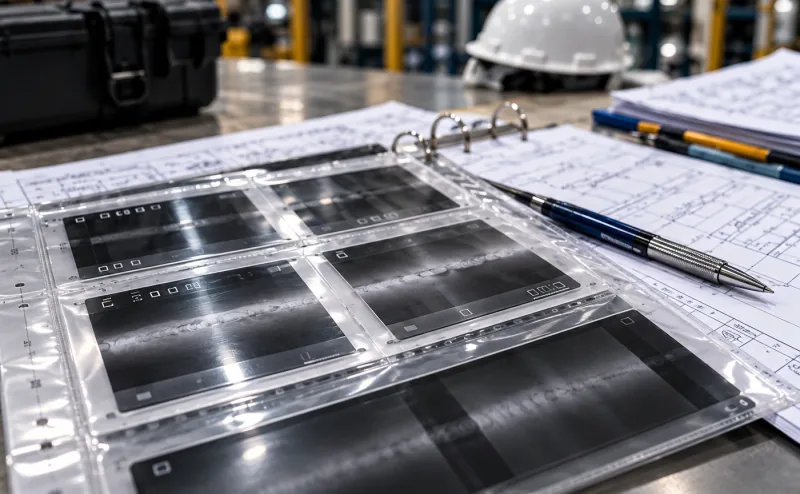
Preparing a radiographic archive means understanding which films it contains, how they are identified and which documents they need to link to. This provides a basis for a campaign covering image capture, verification and a delivery that the project team can use. Not every issue needs to be resolved before discussions begin: distinguish confirmed information from details awaiting clarification and decisions that require the client's input.
1. Describe the archive before setting a schedule
Gather the approximate volume, film sizes and current arrangement: boxes, folders, batches or project references. State which quantities have been counted and which are estimates. Describe groups with incomplete identification or separately stored documentation so that these differences remain visible within the overall volume.
The schedule needs to cover preparation, capture, document linking, checks and corrections. A film's scanning time alone does not establish the output achievable during a working day. An archive with consistent references may need a different preparation process from one with unresolved document links.
2. Preserve the original references
Review how each film relates to its weld, drawing and available report. Keep technical identifiers exactly as they appear in the source; do not translate them for an international delivery. An agreed digital naming convention should preserve the reference needed to locate the original.
When two documents conflict, record both details and flag the discrepancy. Where a reference is missing, leave it awaiting clarification by the designated client contact. Completing it because it resembles another film's reference can create a link that has never been verified.
3. Locate the documents and define the delivery
Identify the reports, drawings and lists available, together with their locations. Then agree what the client needs to receive: DICONDE images, metadata, a traceability index and associated documentation, within the project scope. An additional TIFF delivery can be considered where it is compatible with the project requirements.
Decide the index fields, naming conventions and delivery medium before processing the full archive. Agree who will clarify uncertain references and who will review the dossier. An identification issue then has a defined route for resolution and a responsible contact.
4. Prepare the working arrangements
Mixta RX's main approach is on-site work at the agreed location. Provide information about access, working conditions, availability of the originals and expected dates. Moving films away from that location requires prior authorisation.
Agree repositories, access rights and confidentiality terms as well. Project documentation should not be transferred to a tool or recipient without the appropriate authorisation. The location helps establish the logistics of each international campaign; availability is confirmed when preparing the proposal.
5. Validate a representative sample
Choose an initial batch that reflects the archive's film sizes and identification situations, including cases likely to need clarification. Reviewing it helps refine the complete workflow and check whether the proposed delivery structure is suitable.
Controls should cover identification, image quality, custody of originals and delivery review. Procedures, criteria and records are agreed for the project. Converting and organising the existing radiographic record does not constitute a new interpretation of the weld; that requires a separate scope.
Start with the information you already have
To request an assessment from Mixta RX, prepare the location, approximate volume, film sizes, available documentation and expected dates. Add the quality and delivery requirements you know, and identify anything still unresolved. This gives us a basis for assessing the archive and defining the scope before preparing a quotation.
MIXTA RX
Let’s discuss your RT archive.
Location, volume and formats. We plan the digitisation project with you.
Explore deliverables