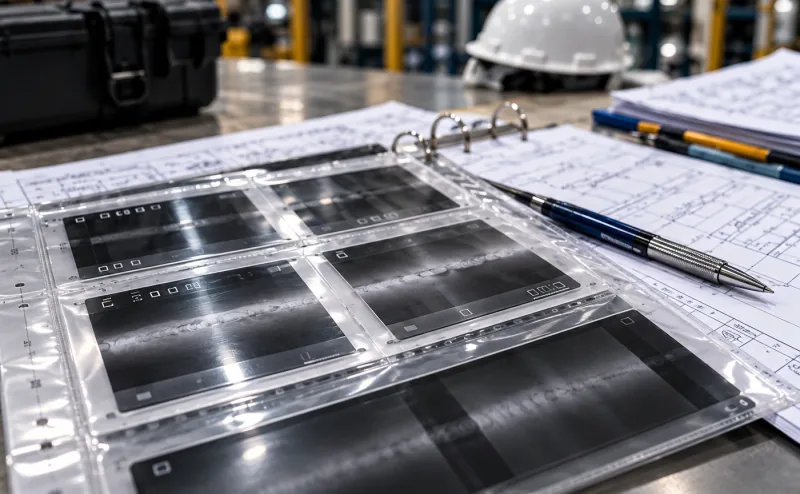
An industrial digitisation delivery should help the recipient locate an image and understand which project record it belongs to. When defining that delivery, distinguish four elements: the digitised image, metadata, the traceability index and associated documentation. Their relationship is agreed before the campaign so that the dossier supports the work the client needs to do.
The image and its metadata
Mixta RX's scope may include DICONDE images and their metadata. The digitised image represents the existing radiographic record; metadata provides the associated information defined for the delivery. Agree which fields will be used, where their values will come from and how they will be checked.
Writing “DICONDE” in an enquiry does not settle all these decisions. A sample delivery should be reviewed with the team that will receive it. If TIFF is required as an additional format, its compatibility with the project requirements must be agreed. The chosen image format and the traceability index serve different purposes.
The index connects the references
The index links films with welds, drawings, reports and the dossier, within the agreed scope. To prepare it, define which reference identifies each original and how its digital files and associated documents can be located. Digital naming conventions should preserve a verifiable relationship with the physical archive.
Consider this fictional example: film FILM-003 links to weld W-017, drawing DRW-024 and report RT-009. The index records those relationships once they have been verified. These codes illustrate a possible arrangement; they are neither client data nor a list of mandatory DICONDE fields. Identifiers remain unchanged across language versions of the dossier.
Reports retain their separate purposes
An existing report associated with a film, a system quality record and a campaign summary are different documents. The delivery should identify which ones are included and how they relate to the images. Agreeing this structure helps recipients understand the purpose of each part of the dossier.
Digitisation converts and organises existing records. It does not automatically produce a new weld-acceptance assessment. A new interpretation needs a separate scope, appropriately qualified personnel and an appropriate procedure. Likewise, a manufacturer's documentation does not replace the quality records for the particular unit used during the campaign.
Handling incomplete references
If the link to a report is missing or two references conflict, record the issue for clarification by the client's contact. Do not complete the association by assumption. Distinguish confirmed links from unresolved ones and agree how open issues will appear during delivery review. This also makes the remaining clarification work visible to the people responsible for it.
Index generation, naming checks and duplicate detection can be assessed as workflow improvements. OCR and AI require testing and human review before extracted references are used. They should not be presented as capabilities already connected to a client's archive unless they have actually been implemented and checked.
Agree a sample before extending the work
An initial sample allows images, references and documentation to be reviewed together. Check whether the recipient can follow the link from the original to the digital file and its documents, whether issues remain open and whether the delivery medium is suitable. Review criteria, access rights, repositories and confidentiality terms should be agreed.
To define your delivery with Mixta RX, explain which documentation is available, which relationships you need to consult and which requirements the dossier must meet. Add the location, approximate volume and expected dates. This provides a basis for assessing the archive and preparing a digitisation and traceability scope suited to the project.
MIXTA RX
Let’s discuss your RT archive.
Location, volume and formats. We plan the digitisation project with you.
Explore deliverables